
Job Overview
Location: Milton, Ontario
Structure: Two-story detached house
Problem: Wildlife activity reported in the attic during nighttime hours
Service: Humane raccoon removal and roofline wildlife exclusion
Visits: 2 visits
Summary
Our team responded to a report of nighttime wildlife activity coming from the attic area of a detached home in Milton. Technician Andrew conducted a full exterior roof inspection and identified multiple wildlife access points. Evidence suggested raccoon entry through a soffit intersection and separate squirrel activity along the roofline.
Humane one-way doors were installed at both entry locations to allow the animals to exit safely while preventing re-entry. Additional preventative work was completed to secure roof vents and vulnerable soffit intersections with galvanized steel screening.
Background / Property Context
The property is a two-story detached home with asphalt shingle roofing and vented soffit systems along the roofline. Homes of this type commonly include multiple attic ventilation points and soffit intersections that can become vulnerable to wildlife access if small openings develop over time.
Roof structures also provide sheltered cavities and insulation that can attract animals seeking nesting areas, particularly during seasonal transitions.
Customer Concern
The homeowner reported hearing movement and scratching sounds in the attic during nighttime hours. These sounds were consistent with larger wildlife species active after dark. The concern was that animals had gained access to the attic through the roof structure.
Inspection & Findings
Andrew performed a complete exterior inspection of the roofline and attic access points.
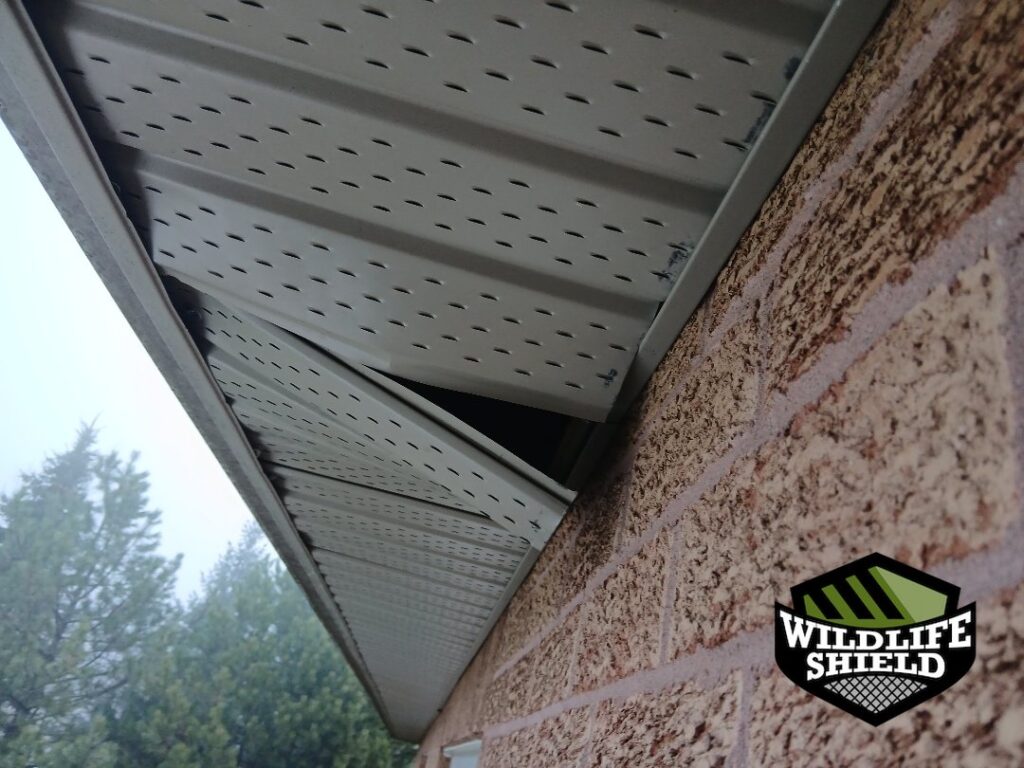
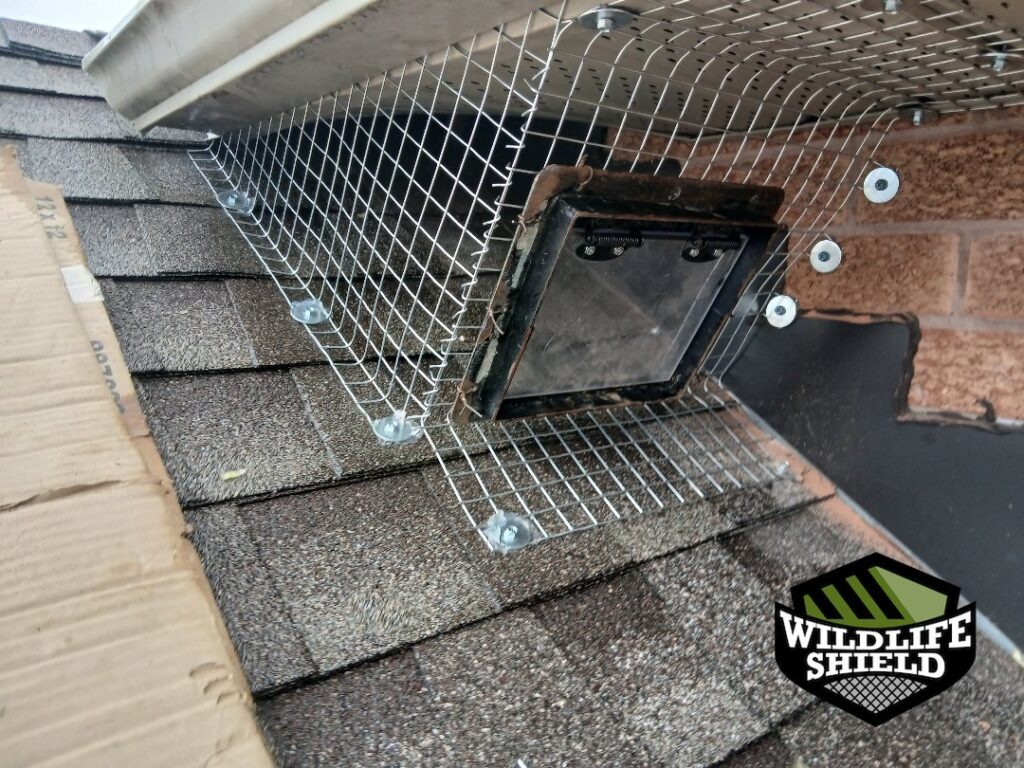
A primary opening was located at a soffit intersection where the soffit panel had separated slightly from the roof edge. This gap provided sufficient access for raccoons to enter the attic space.
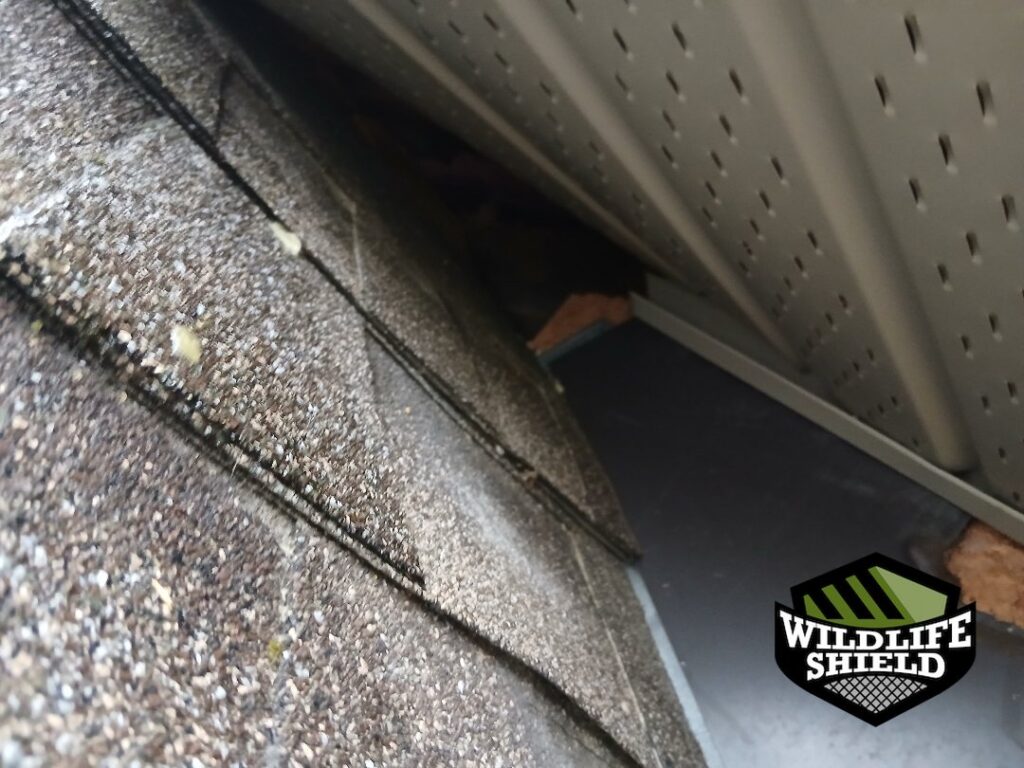
During the inspection, a second access point was identified along the roof edge consistent with squirrel activity.
Visible conditions in the inspection photos include:
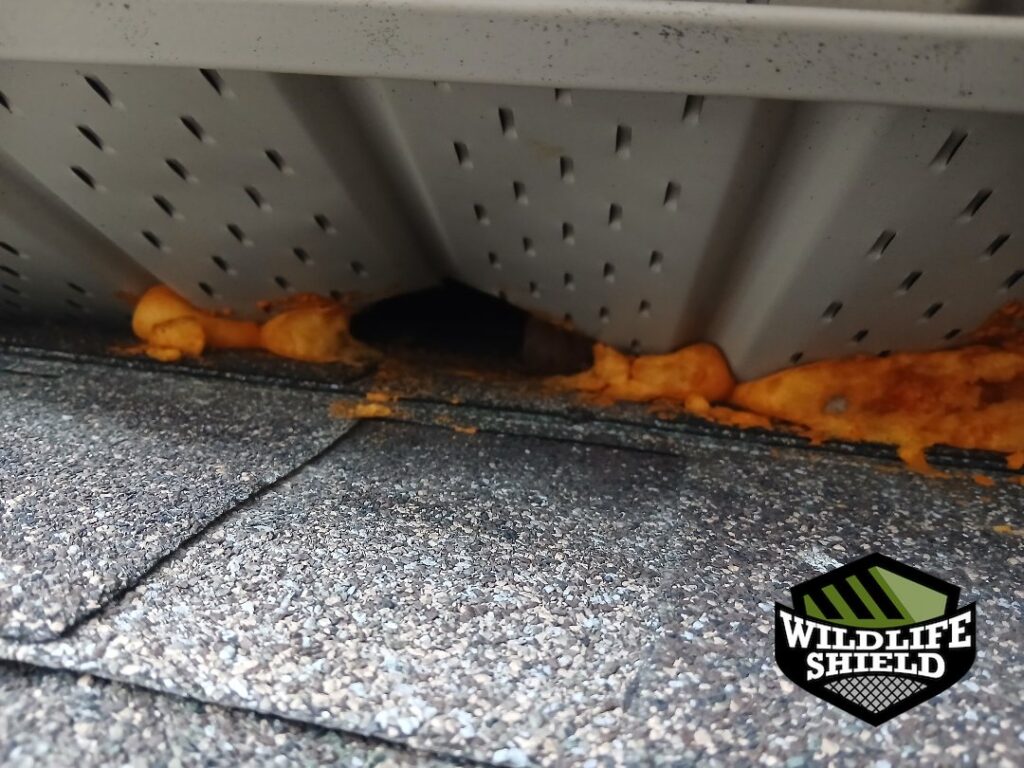
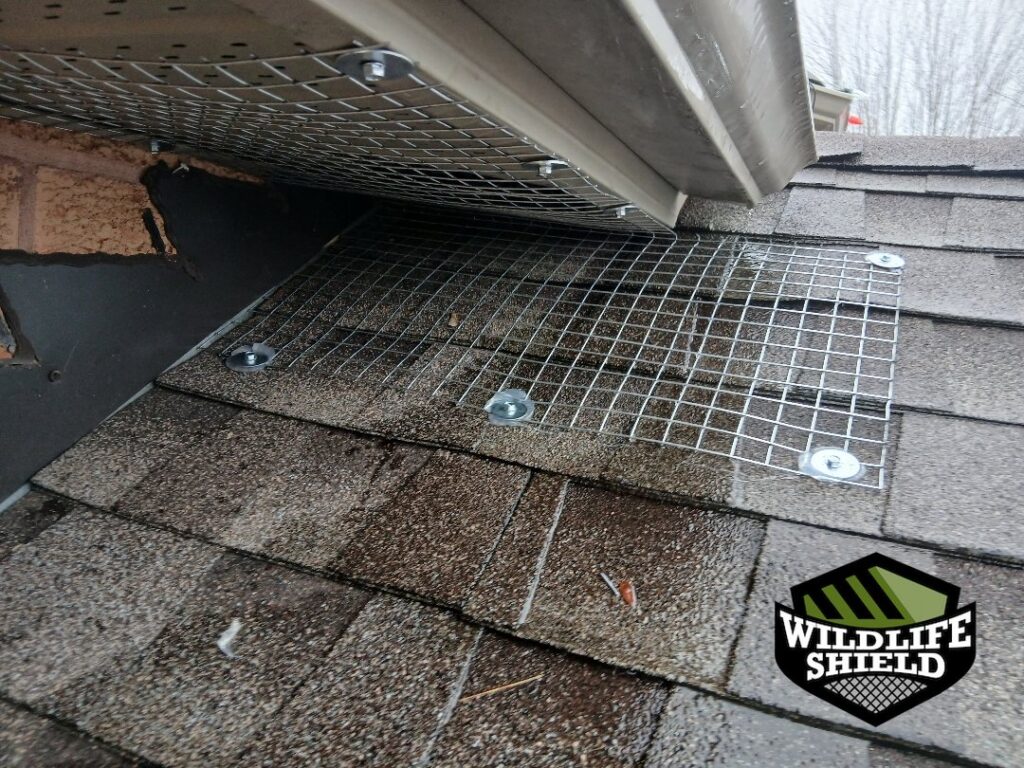
- A soffit opening at the roofline with visible gaps beneath the soffit panel
- Debris and staining beneath the soffit area consistent with wildlife presence
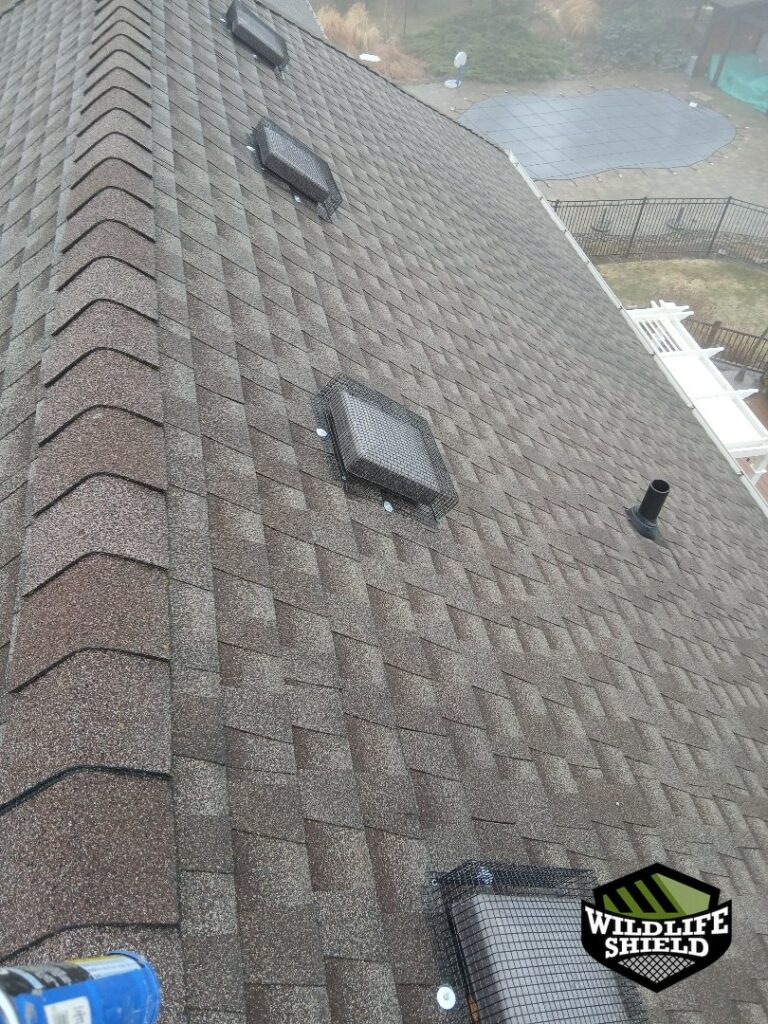
- Roof ventilation openings that required protective screening
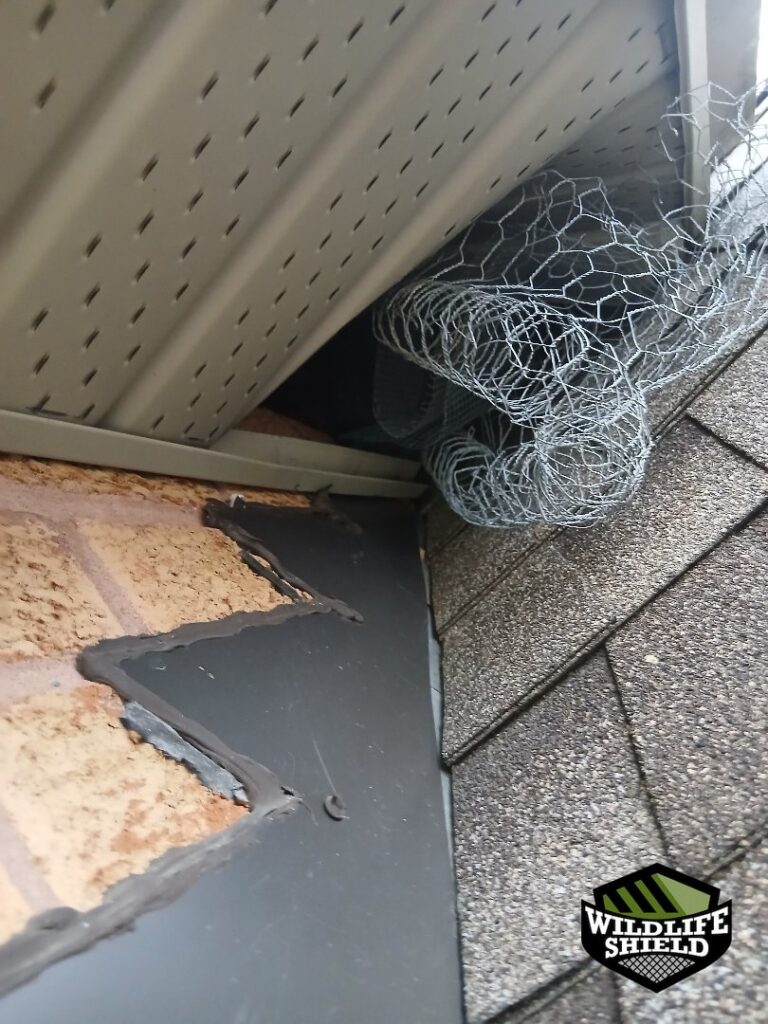
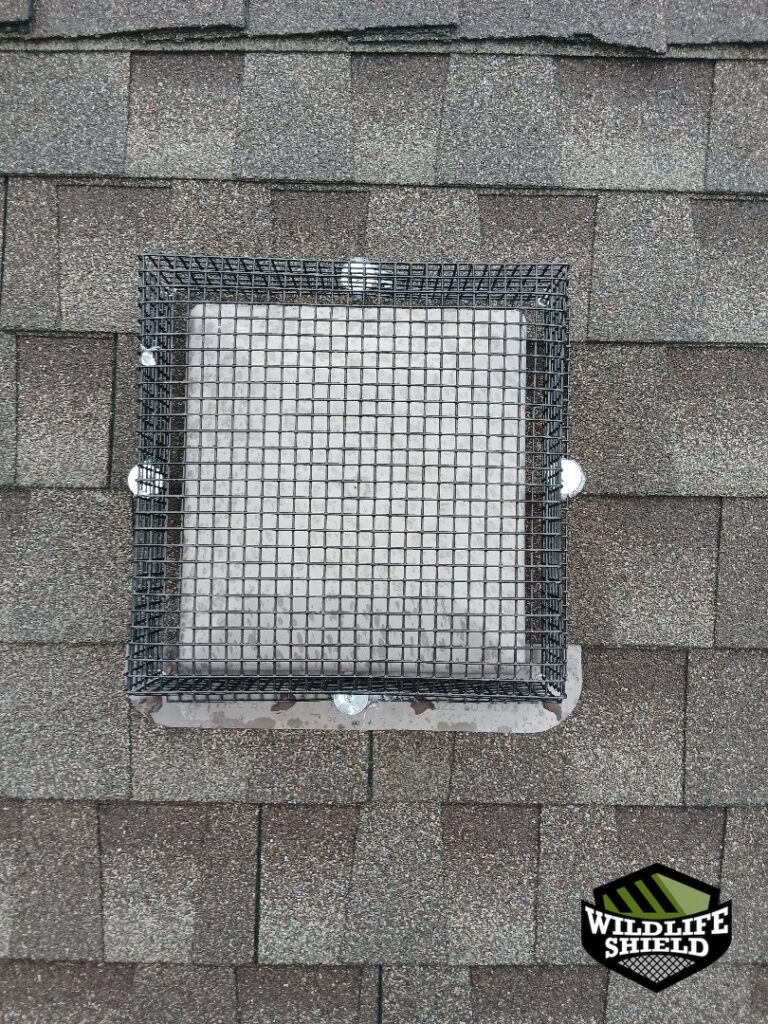
- Installed galvanized steel cages covering roof vent openings after exclusion work
- One-way exclusion doors installed over active entry points
Cause Analysis
Wildlife commonly enters attic spaces through roofline construction joints such as soffit intersections and roof edges. These areas can develop small openings due to material movement, aging fasteners, or previous animal activity.
Raccoons are capable climbers and frequently access roofs from nearby structures or trees. Once on the roof, they may exploit weakened soffit panels or existing gaps. Smaller animals such as squirrels can use similar roofline openings to access attic spaces.
Treatment / Removal
Humane wildlife eviction measures were implemented following the inspection.
Andrew installed a raccoon one-way door over the soffit intersection entry point. This device allows animals inside the attic to exit naturally but prevents them from returning to the structure.
A separate one-way door was installed at the roofline opening associated with squirrel activity.
These exclusion devices remain in place long enough to ensure that animals have vacated the attic space before permanent sealing is completed.
Exclusion & Repairs
Once the active entry points were identified, preventative exclusion work was completed to reduce the risk of future wildlife entry.
The following work was performed:
- Installation of a raccoon one-way door at the soffit intersection entry point
- Installation of a squirrel one-way door at the roof edge opening
- Installation of galvanized steel protective cages on eight roof vents
- Reinforcement of three soffit intersections using galvanized steel mesh
- Sealing of two soffit sections with galvanized steel mesh screening
These materials are designed for long-term durability and prevent animals from accessing ventilation openings or soffit gaps.
Outcome & Confirmation
During the follow-up visit, the homeowner reported that no further wildlife activity had been heard in the attic.
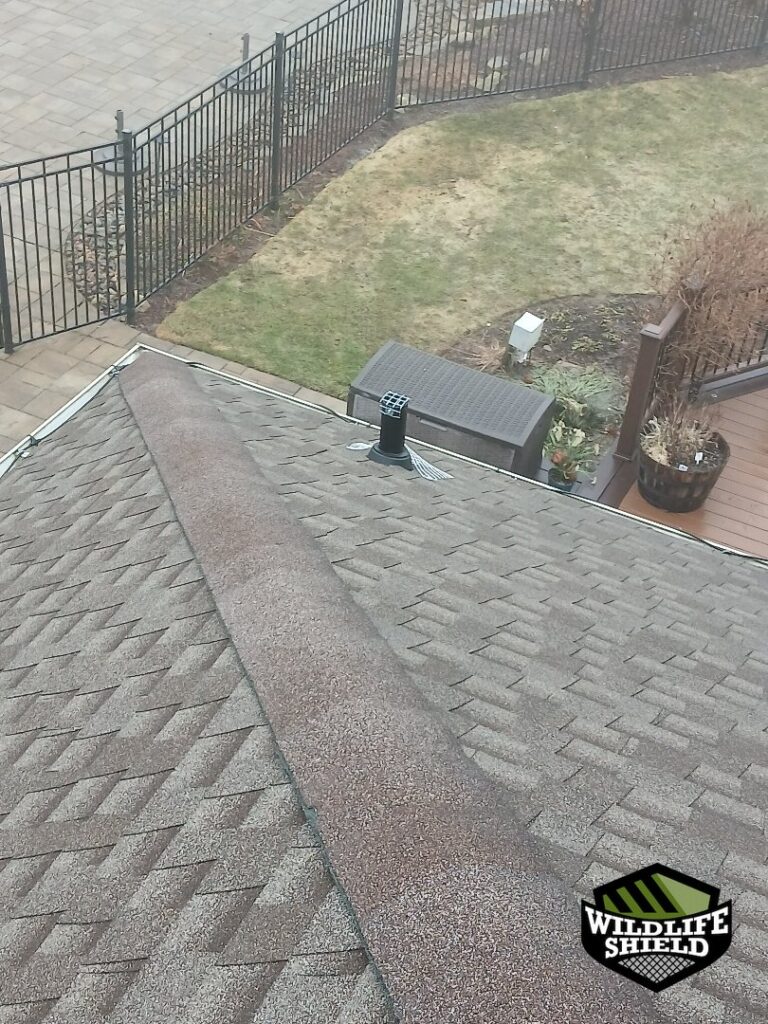
Andrew returned to the property to remove the one-way doors and permanently seal the entry points. The previously installed exclusion materials were inspected and confirmed to be secure.
No additional wildlife access points were observed, and the attic entry locations remained fully sealed following completion of the work.
Technician Notes
Andrew completed a full roof inspection and identified two separate wildlife access points involving different species activity.
Both locations were addressed with species-appropriate one-way doors, allowing humane removal while preventing re-entry. Preventative exclusion measures were installed across multiple roofline features, including roof vents and soffit intersections, to strengthen the overall wildlife protection of the structure.
This work was completed by our Milton Wildlife control team. For Wildlife control inquiries in Milton, contact 647-496-5691.